Issue 09 / 9 · Letters on Paper
What "it still opens" actually means
Aug 31, 2026
Ten years is a long time to trust a company. It is a much shorter time to trust an ordinary file.
Month one and year six ask different questions
In the first month nobody worries about this. A few photos, a few lines. The only question that matters is whether you can leave one line tonight.
The question changes once time accumulates. By the third year, by the sixth, what you have is no longer a list of entries in an app. It includes the empty room the day before you moved, the ordinary Tuesday you cannot otherwise recall, the afternoon that turned out to matter later. A missing feature is an inconvenience. Years that will not open is a different category of loss.
"It still opens" is a question about format
No one can promise that the people who made an app will be around in ten years. That promise is not available, and any product that offers it is guessing.

What can be examined instead is the shape the record is kept in. When entries are packed into one large proprietary blob, the blob is the lock: you need the program that understands it before you can read a single day.
Today, a note keeps each day as its own folder. Inside is the photo file for that day and a small text file holding the date and the line you wrote. The photograph stays a photograph. The sentence stays readable text. Nothing in that arrangement requires a particular application to be interpreted — which is the least dramatic and most durable property a long-lived record can have.
You can check it without the app
Those folders sit in the app's iCloud Drive container, and that container is browsable from the iOS Files app. The folder names are long identifiers rather than dates, which looks unfamiliar at first, but open one and the photo for that day is simply there.
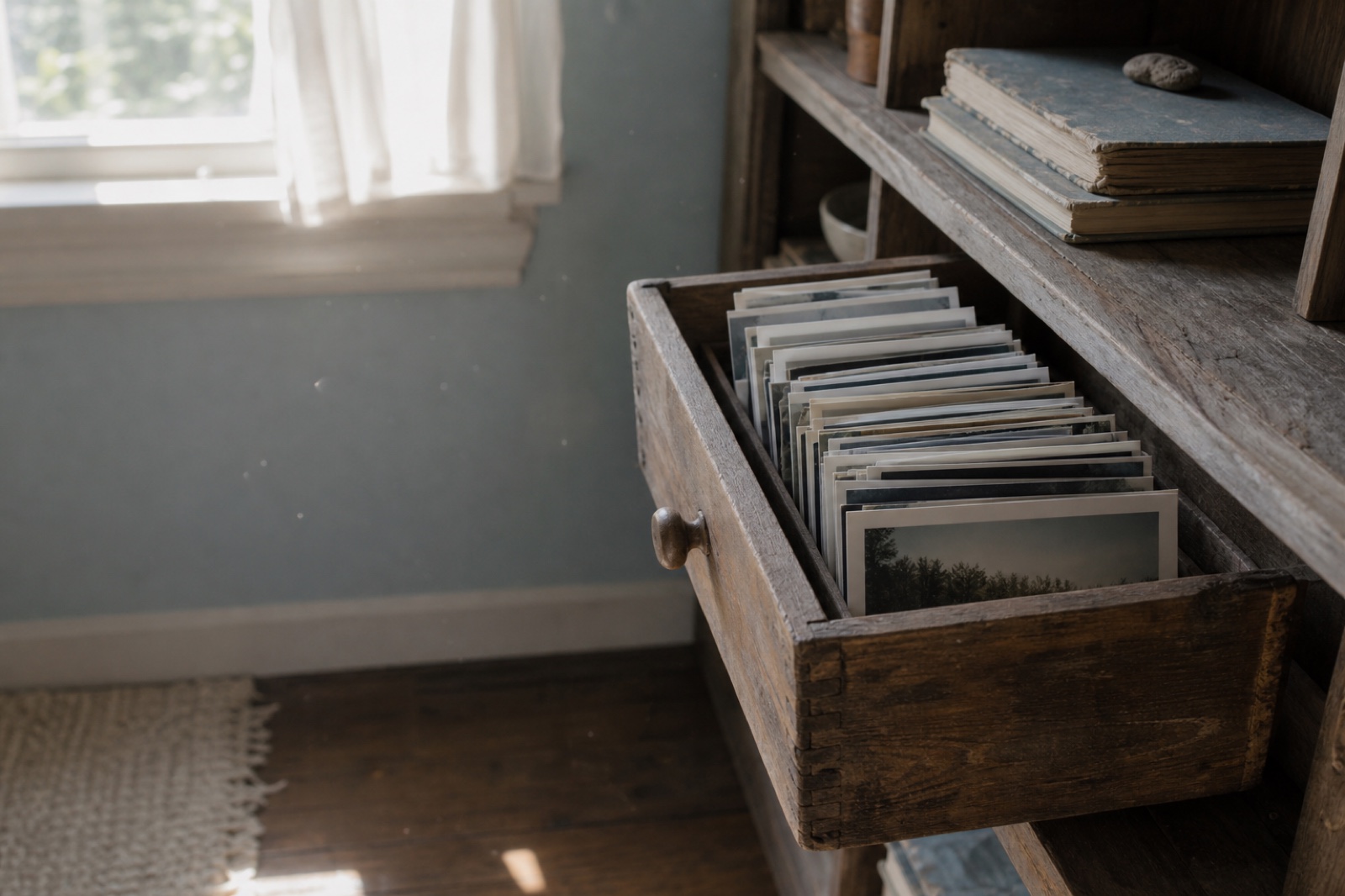
This is not a feature so much as a form of evidence. Believing a record is safe somewhere and having opened the drawer once are not the same state of mind, and for something you intend to keep for a decade, the difference is worth the thirty seconds.
The person who opens it later
One photo and one line is small today. Across ten years it becomes more than three thousand days.
The reader of that archive is not you now; it is you after enough time has passed that you no longer remember writing most of it. You cannot choose in advance which of today's photographs will matter. That gets decided later, by someone with more information than you have tonight.
So the question a long-term journal has to answer is not how good it looks this year. It is whether the thing will still be within reach when the person who needs it finally goes looking.
Story archive
The series so far
Read in order, the small one-photo rule becomes a view of why the app stays quiet, private, and easy to return to.
- Issue 01 One photo, one line — and that's the whole diary
- Issue 02 A diary you're allowed to skip
- Issue 03 The three seconds before you post
- Issue 04 A month you can see all at once
- Issue 05 Where does your diary actually live?
- Issue 06 Why "Today's Print"
- Issue 07 A diary that lives on your home screen
- Issue 08 A list of things we left out
- Issue 09 What "it still opens" actually means Current
Keep today in a single frame
One photo and a short note is all it takes.