Issue 04 / 9 · Letters on Paper
A month you can see all at once
Aug 17, 2026
A journal only pays off when you go back to it. On calendars, and on meeting yourself a year later.
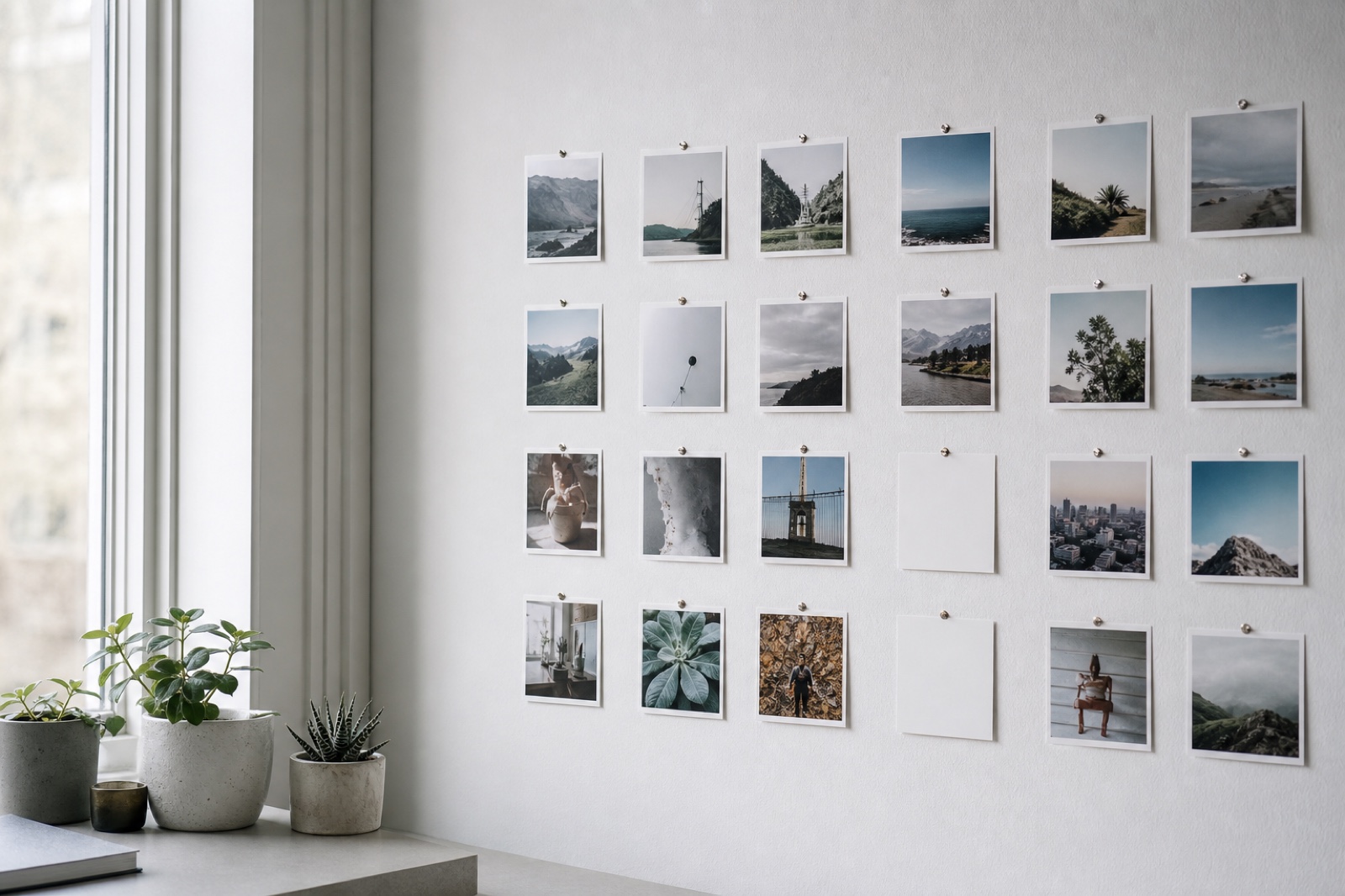
There's an odd moment that arrives a few weeks into most journaling apps: you realize you've been writing steadily and have never once gone back to read any of it. Entries are accumulating. Nothing is being used.
If you can't revisit it, it didn't accumulate
That's usually structural rather than personal. When entries flow in a single column, newest at the top, last month is a long scroll away — and when you get there, it's just more entries in a column. You forget what you came looking for.
Camera rolls have the same shape. Thousands of images in date order, and no sense of what any given week actually was. Past a certain volume, more photos means less memory, not more.
What changes when a month fits on one screen
So the calendar here puts each day's photo into its square. Not a grid of numbers — a grid of thirty photographs.
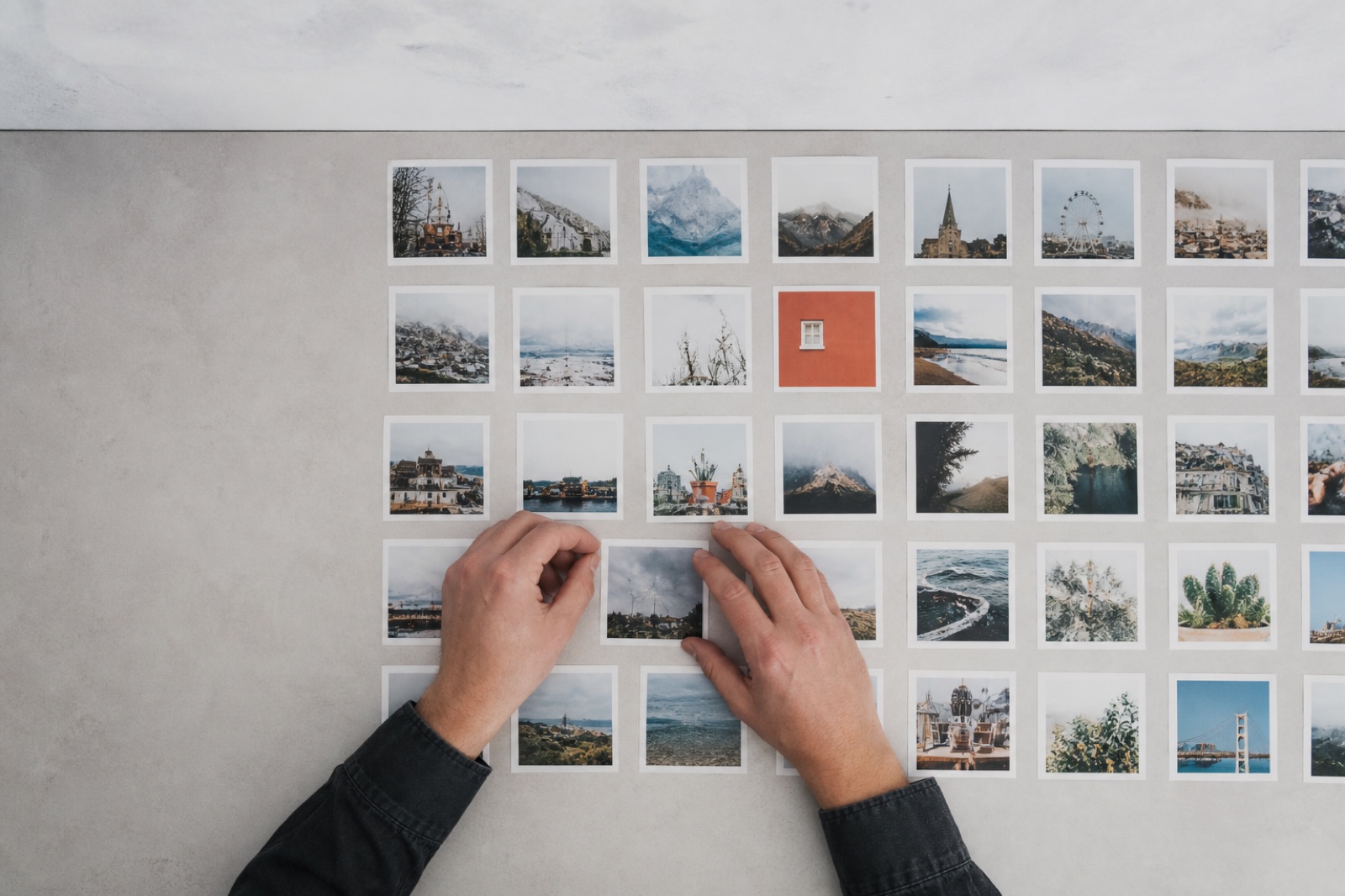
Most people do the same thing the first time they open it: they look at it far longer than they meant to, without looking for anything in particular. Images that said little on their own start saying something side by side. That was a month spent mostly outdoors. That week you never left the house. That color is what August looked like.
You get a summary of the month without ever having written one — and not in sentences, but in light.
Not your best photos. That day's photo.
There's one condition for this to work: the picture in each square has to be the day's photo, not the good one.
Keep only the impressive moments and your calendar starts to look like someone else's feed. Let ordinary days sit there as they were, and it becomes a record of your month. An overcast window. Dinner on a night when nothing happened. One shot that came out blurry. The calendar only reads as true when those are in it.
This is where the one-photo-a-day constraint quietly helps a second time. When there's only one slot, you tend to pick the photo that's most like the day rather than the one that looks best.
For whoever you are in a few years
The real recipient of a journal isn't you today. It's you in a few years.
So when there's an entry from a year ago on this date, the app sets it out on the calendar. It doesn't push a notification about it; it's simply there when you open the month. Roughly the size of a coincidence — you happen to see what you were looking at this time last year.
It's rarely anything momentous. Usually it's an ordinary afternoon. But an ordinary afternoon arriving from a year's distance is strangely hard to look away from, because the scene that meant nothing at the time turns out, in hindsight, to be what that period looked like.
The photo you keep today will do the same thing. Nothing special now. Waiting here for you a year from now.
Story archive
The series so far
Read in order, the small one-photo rule becomes a view of why the app stays quiet, private, and easy to return to.
- Issue 01 One photo, one line — and that's the whole diary
- Issue 02 A diary you're allowed to skip
- Issue 03 The three seconds before you post
- Issue 04 A month you can see all at once Current
- Issue 05 Where does your diary actually live?
- Issue 06 Why "Today's Print"
- Issue 07 A diary that lives on your home screen
- Issue 08 A list of things we left out
- Issue 09 What "it still opens" actually means
Keep today in a single frame
One photo and a short note is all it takes.